
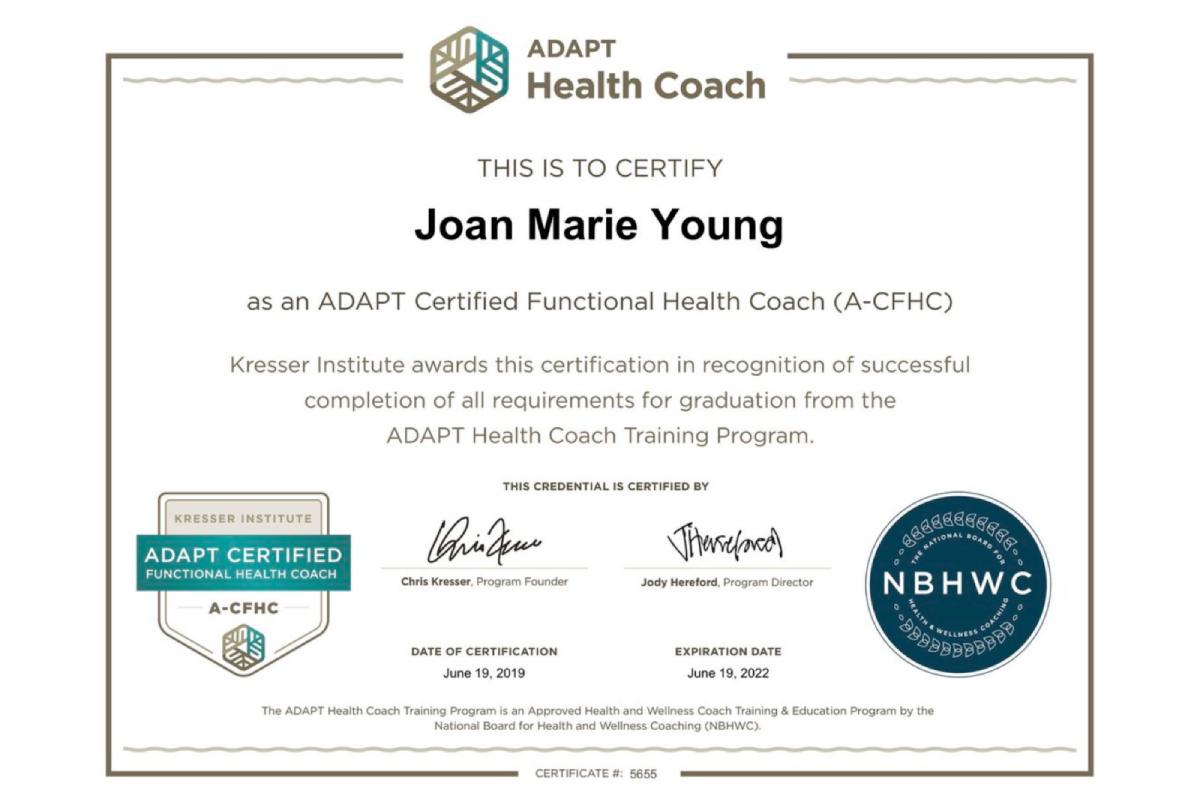
The issue of mental health has gained significant momentum in the modern society whereby the number of people becoming aware of the problem and speaking openly about their plight has increased. This is causing the demand of mental health coaches to rise.
These experts assist the clients to cope with mental health problems by offering them support and guidance depending on their needs. To become a mental health coach, one needs to be certified, and in most cases, it is accompanied by a set of pre-qualifications and tough exams.
On the following, we explore the certification process to become a mental health coach of what you should do to realize your ambitions.
Table of Contents
What Is a Mental Health Coach Certification?
Mental health coach certification is the professional certification which proves that a coach has been trained in a structured mental wellness support, coaching approaches, ethical practices and communication with clients. Mental health coaches do not necessarily diagnose or treat clinical disorders but are in general directed towards goal-oriented treatment, lifestyle changes and emotional resilience unlike licensed therapists or psychologists.
Certification programs generally provide education in:
- Behavioral change strategies
- Emotional intelligence and resilience
- Motivational interviewing
- Mindfulness techniques
- Ethical coaching practices
- Client assessment frameworks
Many certification providers also require supervised coaching hours before issuing credentials.
Some well-recognized certifying organizations include:
- International Coach Federation
- National Board for Health & Wellness Coaching
- American Counseling Association
- Coaches Training Institute
These organizations maintain professional standards and ensure coaches follow ethical guidelines when working with clients.
What Does a Mental Health Coach Do?
| Role / Task | What a Mental Health Coach Does |
| Provides Support | Offers encouragement and guidance to help people manage stress, emotions, and daily challenges. |
| Sets Goals | Helps clients create realistic personal, emotional, and wellness goals. |
| Builds Healthy Habits | Supports the development of routines such as better sleep, exercise, mindfulness, and self-care. |
| Improves Mindset | Helps clients work on positive thinking, confidence, motivation, and resilience. |
| Teaches Coping Skills | Shares practical strategies for dealing with anxiety, pressure, and life transitions. |
| Encourages Accountability | Checks progress regularly and motivates clients to stay on track with their goals. |
| Promotes Self-Awareness | Helps individuals understand their thoughts, behaviors, and emotional patterns. |
| Supports Life Balance | Guides clients toward improving work-life balance, relationships, and overall well-being. |
| Offers Non-Clinical Guidance | Provides coaching and wellness support, but does not diagnose or treat mental health disorders. |
| Refers to Professionals When Needed | Suggests seeing a licensed therapist, counselor, or doctor when clinical care is necessary. |
Mental Health Coach vs Therapist vs Counselor
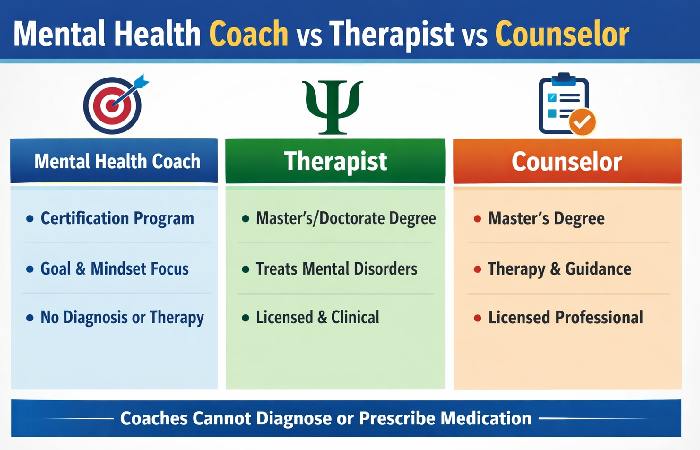
The confusion by many individuals is the difference between a mental health coach and a licensed therapist or counselor. Although these are similar roles in terms of mental health support, there are differences in terms of training, scope of practice and legal authority.
| Role | Education Requirement | Scope of Work | Licensing |
| Mental Health Coach | Certification program | Goal setting, mindset support, accountability | Usually not regulated |
| Therapist / Psychotherapist | Master’s or Doctorate | Diagnoses and treats mental health disorders | Licensed |
| Licensed Mental Health Counselor | Master’s degree + supervised hours | Clinical treatment and therapy | Licensed |
| Life Coach | Certification optional | Personal development guidance | Not regulated |
Mental health coaches cannot diagnose mental illnesses or prescribe medication. Instead, they help clients develop coping strategies, build healthier routines, and improve emotional resilience.
Types of Mental Health Coaching Certifications
Different programs specialize in specific coaching areas. Choosing the right certification often depends on your career goals.
- Health and Wellness Coaching Certifications
These programs combine mental well-being with lifestyle changes such as nutrition, stress management, and physical health.
Example certification:
- National Board for Health & Wellness Coaching
Typical cost: $4,500 – $7,500
- Professional Coaching Certifications
Professional coaching credentials focus on communication, coaching frameworks, and client accountability.
Example certification levels from International Coach Federation:
| Certification | Required Training Hours | Coaching Experience |
| Associate Certified Coach (ACC) | 60+ hours | 100 hours |
| Professional Certified Coach (PCC) | 125+ hours | 500 hours |
| Master Certified Coach (MCC) | 200+ hours | 2,500 hours |
Estimated cost: $3,000 – $12,000 depending on program
- Mental Health–Focused Coaching Certifications
Some institutions offer programs specifically designed for mental health coaching.
These programs cover:
- Stress and anxiety management
- Cognitive behavioral coaching techniques
- Trauma-informed coaching
- Mindfulness and emotional regulation
Estimated cost range: $1,500 – $6,000
Prerequisites for Becoming a Mental Health Coach
| Prerequisite | Details |
| Interest in Mental Wellness | A strong passion for helping others improve their emotional well-being and quality of life. |
| Good Communication Skills | Ability to listen carefully, speak clearly, and build trust with clients. |
| Empathy and Patience | Understanding people’s feelings and supporting them without judgment. |
| Basic Knowledge of Mental Health | Familiarity with stress, anxiety, emotional wellness, and common mental health challenges. |
| Coaching Training | Completion of a coaching course or certification program related to mental health or wellness coaching. |
| Educational Background | A background in psychology, counseling, social work, or health can be helpful, though not always required. |
| Goal-Setting Skills | Ability to help clients set practical goals and create action plans. |
| Professional Ethics | Understanding boundaries, confidentiality, and when to refer clients to licensed mental health professionals. |
| Self-Awareness | Knowing your own strengths, limitations, and coaching style. |
| Continuous Learning | Willingness to stay updated on mental wellness practices, coaching methods, and client support strategies. |
Curriculum in Mental Health Coaching Programs
Most certification programs include structured modules that cover both theoretical knowledge and practical coaching skills.
Common topics include:
- Foundations of Mental Health
- Overview of psychological disorders
- Stress and anxiety mechanisms
- Emotional regulation
- Coaching Methodologies
- Goal-setting frameworks
- Motivational interviewing
- Behavioral change models
- Mindfulness and Well-Being
- Meditation techniques
- Stress reduction methods
- Positive psychology
- Ethics and Professional Boundaries
- Confidentiality rules
- Referral to therapists when necessary
- Client protection practices
- Business and Practice Development
- Building a coaching practice
- Marketing strategies
- Client management systems
Duration of Mental Health Coach Certification Programs
The duration varies depending on the program format and intensity.
| Program Type | Duration |
| Short online certificate | 3–6 months |
| Professional coaching certification | 6–12 months |
| Advanced certification | 12–24 months |
Part-time programs are common because many students pursue certification while working full-time. (Coaches Training Institute)
Cost of Mental Health Coach Certification
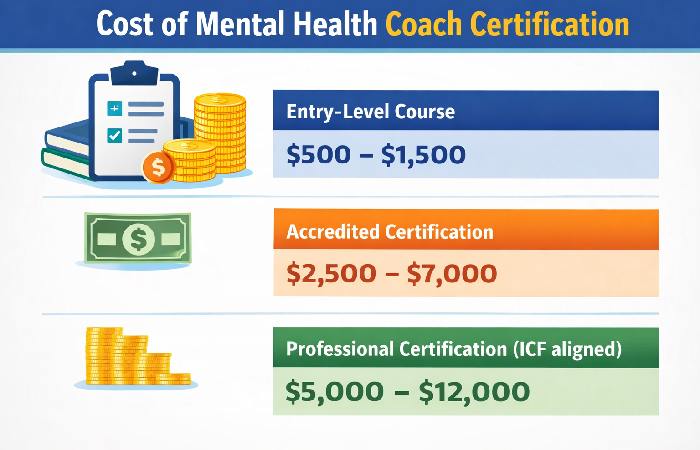
The cost of becoming a certified mental health coach varies widely depending on the institution and training level.
| Certification Provider Type | Estimated Cost |
| Entry-level online course | $500 – $1,500 |
| Accredited coaching certification | $2,500 – $7,000 |
| Professional coaching program (ICF aligned) | $5,000 – $12,000 |
Additional costs may include:
- Certification exam fees: $200 – $500
- Membership fees: $100 – $300 annually
- Continuing education courses
Online vs In-Person Certification Programs
Modern coaching programs are often delivered online. Each format has advantages.
Online Programs
Advantages:
- Flexible schedules
- Lower costs
- Global instructors and communities
Disadvantages:
- Less face-to-face mentorship
- Requires self-discipline
In-Person Programs
Advantages:
- Real-time coaching practice
- Direct feedback from instructors
- Networking opportunities
Disadvantages:
- Higher tuition costs
- Less schedule flexibility
How To Become a Certified Mental Health Coach
The process for becoming a mental health coach certification varies depending on the type of certification you obtain.
Depending on the organization, you might have to take a series of assessments. These assessments will test your knowledge of coaching skills and techniques. Some organizations may also require you to submit a sample coaching session or a written case study.
After you pass these tests, you will be invited to take the final certification exam. This exam is designed to test your knowledge of coaching theory and application. To prepare, you can study by reviewing sample questions and practicing tests so that you are ready for the real thing.
Once you have passed the exam, you will receive your certification and be able to practice as a mental health coach.
Skills Required to Become a Successful Mental Health Coach
Certification provides technical knowledge, but successful coaches also develop interpersonal competencies.
Key skills include:
- Active listening
- Emotional intelligence
- Empathy and compassion
- Problem-solving abilities
- Motivational communication
- Confidentiality and professionalism
These skills help build trust with clients and create meaningful behavioral change.
Career Opportunities for Certified Mental Health Coaches
Certified coaches can work in a variety of professional settings.
Common Career Paths
- Private coaching practice
- Corporate wellness programs
- Schools and universities
- Healthcare organizations
- Online coaching platforms
Some coaches also collaborate with licensed therapists to provide non-clinical support between therapy sessions. (International Coach Federation)
Average Salary for Mental Health Coaches
Income varies significantly depending on experience, location, and client base.
| Experience Level | Estimated Annual Income |
| Beginner coach | $25,000 – $40,000 |
| Mid-level coach | $40,000 – $70,000 |
| Experienced coach | $70,000 – $120,000+ |
Many coaches charge per session:
- $50 – $100 per session (new coaches)
- $100 – $250 per session (experienced coaches)
Corporate wellness contracts can increase earnings significantly.
Ethical Guidelines for Mental Health Coaches
Because coaching involves sensitive conversations, ethical practices are essential.
Professional organizations recommend coaches follow guidelines such as:
- Maintain strict client confidentiality
- Avoid diagnosing mental disorders
- Refer clients to licensed therapists when necessary
- Establish clear coaching agreements
The International Coach Federation provides a widely recognized Code of Ethics used by many coaching professionals.
Continuing Education and Certification Renewal
Most professional coaching credentials require ongoing education to maintain certification.
Typical renewal requirements include:
- Continuing education credits every 2–3 years
- Proof of coaching practice hours
- Renewal fees
Continuing education topics may include:
- trauma-informed coaching
- advanced behavioral coaching
- workplace mental wellness
Global Demand for Mental Health Coaches
The demand for mental health professionals and coaches has increased due to:
- rising awareness of mental health issues
- workplace burnout and stress
- growth of remote coaching services
- increased corporate wellness initiatives
Most companies have turned to coaches to provide employee mental health, resilience, and productivity.
Who Should Consider Becoming a Mental Health Coach?
This is a career that a person should take up in case they:
- are enthusiastic with a desire to assist.
- like mentoring or counseling.
- are well communicated.
- desire work flexibility or remoteness.
Healthcare, education, human resources, and social work professionals are the primary examples of professionals who successfully changed to become coaches.
Final Words
To become a licensed mental health counselor is not an easy task one that may require months or even years to complete depending on the conditions.
With that being said, the advantages of licensure are multiple. It can assist you not only in receiving a greater salary and becoming more competitive in the work market, but also enable you to assist more people in the broadest possible environments.
In case you are eager to serve other people and are willing to help them be in a better state of mind, certification can certainly help.
